
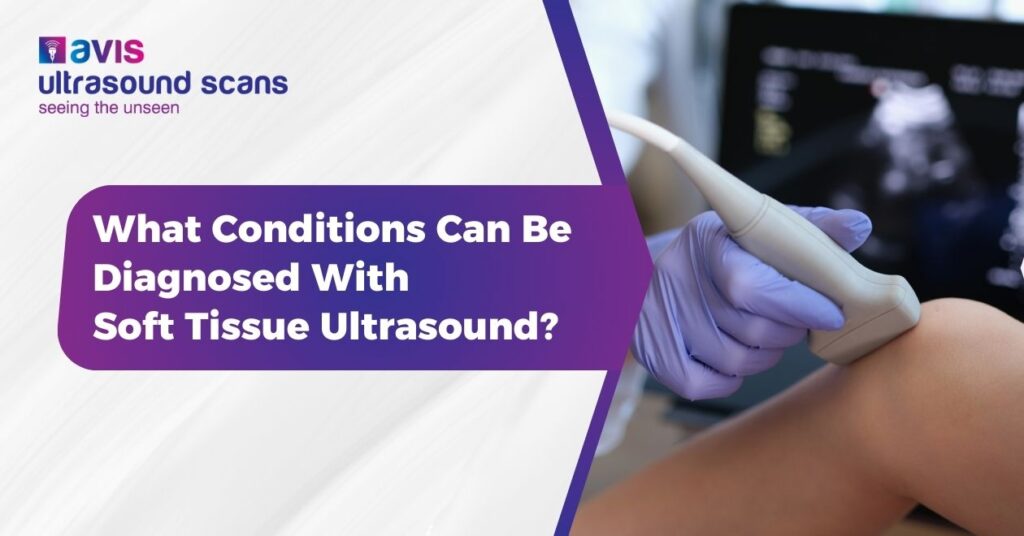
Not every medical problem involves bones or internal organs. Many symptoms such as a lump under the skin, localized pain, swelling, or movement-related discomfort arise from soft tissues. Identifying the cause early is important, and this is where soft tissue ultrasound becomes a valuable diagnostic tool.
At Avis Ultrasound Scanning Centre, Nallagandla, soft tissue ultrasound is widely used to assess conditions affecting muscles, tendons, ligaments, lymph nodes, and superficial tissues. It allows doctors to quickly understand what’s happening beneath the skin and decide the right course of action.
Understanding Soft Tissue Ultrasound
Soft tissue ultrasound is an imaging technique that uses sound waves to create detailed images of tissues that do not appear clearly on X-rays. These include muscles, fat layers, connective tissue, blood vessels, and fluid-filled structures.
The test is:
- Non-invasive
- Radiation-free
- Painless
- Suitable for all age groups
Because it provides real-time imaging, doctors can also observe movement, blood flow, and changes during the examination itself.
Evaluation of Localized Lumps and Nodules
One of the most frequent reasons for soft tissue ultrasound is the presence of a palpable lump. While many such swellings are harmless, imaging helps identify their nature.
Soft tissue ultrasound can distinguish between:
- Fatty growths like lipomas
- Fluid-filled cysts
- Inflammatory swellings
- Enlarged or reactive lymph nodes
- Solid masses requiring further evaluation
By understanding whether a lump is solid or cystic, doctors can avoid unnecessary anxiety or investigations.
Muscle Pain, Tears, and Overuse Injuries
Muscle-related issues are common among athletes, fitness enthusiasts, and individuals with physically demanding routines. Soft tissue ultrasound is extremely effective in assessing muscle health.
It helps diagnose:
- Muscle strain and partial tears
- Complete muscle ruptures
- Internal bleeding (muscle hematoma)
- Chronic muscle inflammation
Because the scan shows movement in real time, it is particularly helpful in monitoring healing and guiding rehabilitation.
Tendon Disorders and Ligament Injuries
Pain near joints often originates from tendons or ligaments rather than bones. Soft tissue ultrasound provides a close look at these structures.
Conditions commonly diagnosed include:
- Tendon inflammation (tendinitis)
- Tendon sheath inflammation (tenosynovitis)
- Partial or complete tendon tears
- Ligament sprains
- Calcification within tendons
This is especially useful for shoulder pain, tennis elbow, ankle injuries, and wrist discomfort.
Fluid Collections and Swelling
Unexplained swelling can sometimes be caused by fluid accumulation rather than solid tissue growth. Soft tissue ultrasound helps identify and characterize these collections.
It is commonly used to detect:
- Abscesses caused by infection
- Seromas after surgery
- Bursitis around joints
- Localized inflammatory fluid
Early detection helps doctors decide whether medical treatment, drainage, or surgical intervention is required.
Lymph Node Assessment
Enlarged lymph nodes can appear due to infections, inflammation, or more serious conditions. Soft tissue ultrasound allows detailed evaluation of lymph nodes based on size, shape, internal structure, and blood flow.
It is frequently used to examine lymph nodes in:
- Neck
- Underarm (axillary region)
- Groin
This information helps doctors determine whether simple observation is enough or further investigation is necessary.
Detection of Soft Tissue Infections
Soft tissue ultrasound is particularly useful when infection is suspected. It helps differentiate between simple skin inflammation and deeper infections.
Doctors use it to identify:
- Cellulitis
- Deep-seated abscesses
- Infected cysts
- Foreign body reactions
This distinction is important because abscesses may require drainage, while cellulitis is treated medically.
Evaluation of Benign and Suspicious Masses
While many soft tissue masses are benign, ultrasound helps doctors assess features that indicate whether further testing is required.
Ultrasound findings can guide decisions about:
- Monitoring the lesion
- Ordering MRI for deeper evaluation
- Planning biopsy
- Referring for surgical opinion
This stepwise approach avoids unnecessary procedures while ensuring patient safety.
Why Soft Tissue Ultrasound Is Often Preferred
Doctors frequently choose soft tissue ultrasound because it offers several practical advantages:
- No radiation exposure
- Real-time assessment
- Cost-effective compared to advanced imaging
- Quick examination time
- Safe for repeated follow-ups
It is often the first investigation before considering CT or MRI.
The Role of Expertise in Accurate Diagnosis
The accuracy of a soft tissue ultrasound depends heavily on the skill of the radiologist performing and interpreting the scan. Proper technique, attention to detail, and clinical correlation are essential for meaningful results.
At Avis Ultrasound Scanning Centre, Nallagandla, experienced radiologists use advanced equipment to ensure precise evaluation and clear reporting, helping doctors make confident decisions.
Schedule Your Scan with Confidence
If your doctor has advised a soft tissue ultrasound, choose a centre that focuses on accuracy, safety, and patient comfort. At Avis Ultrasound Scanning Centre, Nallagandla, we are committed to delivering reliable diagnostic imaging you can trust.
Call +91 88774 69999 to book your appointment today.
Clear diagnosis leads to better care — take the next step with confidence.