
During pregnancy, every check-up provides important information about the baby’s health and development. One such crucial assessment is the AFI scan, which helps doctors understand whether the baby has enough amniotic fluid to grow safely. While many expecting mothers hear this term during routine antenatal visits, its purpose and significance are not always clearly understood.
At Avis Ultrasound Scanning Centre, known as one of the best ultrasound scanning centres in Nallagandla, AFI scans are performed with advanced technology to support safe pregnancies and timely medical decisions.
What is an AFI Scan?
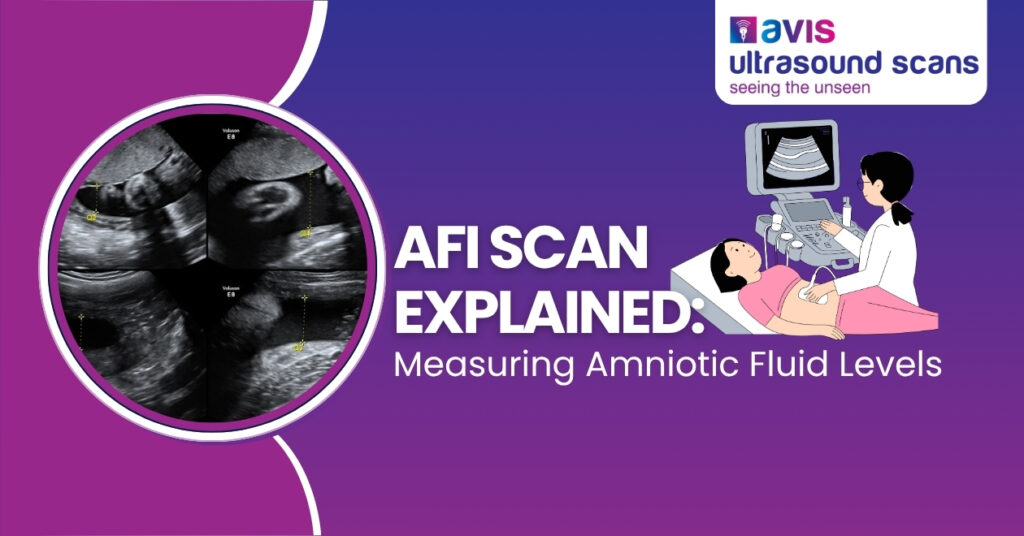
AFI stands for Amniotic Fluid Index. An AFI scan is a specialized obstetric ultrasound used to measure the amount of amniotic fluid surrounding the baby in the uterus. Amniotic fluid plays a vital role in protecting the baby, allowing movement, supporting lung development, and maintaining a stable environment inside the womb.
The scan is usually performed during the second and third trimesters, and more frequently in high-risk pregnancies or when fluid-related concerns are suspected.
Why is Amniotic Fluid Important?
Amniotic fluid is not just a protective cushion, it is essential for normal fetal growth and development. Adequate fluid levels help:
- Protect the baby from external pressure
- Allow free movement for muscle and bone development
- Support lung maturation
- Maintain a stable temperature
- Prevent compression of the umbilical cord
Both low and excessive amniotic fluid levels can affect pregnancy outcomes, which is why accurate measurement is critical.
How is the AFI Scan Performed?
The AFI scan is a simple, painless procedure similar to a routine pregnancy ultrasound.
During the scan:
- The abdomen is divided into four quadrants
- The deepest vertical pocket of fluid in each quadrant is measured
- These measurements are added together to calculate the AFI value
The entire process takes about 15–20 minutes and uses no radiation, making it completely safe for both mother and baby.
At Avis Ultrasound Scanning Centre, accurate measurement is done by a top female radiologist for ultrasound in Nallagandla, Hyderabad which ensures both comfort and precision during the procedure.
What is Considered a Normal AFI?
AFI values are measured in centimeters and typically interpreted as follows:
- Normal AFI: 8–18 cm
- Low AFI (Oligohydramnios): Less than 5 cm
- Borderline AFI: 5–8 cm
- High AFI (Polyhydramnios): More than 24 cm
These values help doctors decide whether closer monitoring or intervention is needed.
What Does Low Amniotic Fluid Mean?
Low amniotic fluid, also known as oligohydramnios, can occur for several reasons, including:
- Placental insufficiency
- Dehydration in the mother
- Prolonged pregnancy
- Fetal kidney or urinary tract issues
- Rupture of membranes
Low fluid levels may restrict fetal movement and increase the risk of complications. However, early detection through AFI scanning allows doctors to manage the condition with hydration, monitoring, or delivery planning if required.
What Does High Amniotic Fluid Mean?
Excessive amniotic fluid, known as polyhydramnios, may be associated with:
- Gestational diabetes
- Fetal swallowing difficulties
- Multiple pregnancy
- Infections
- Unknown causes in many cases
High fluid levels can increase discomfort for the mother and raise the risk of preterm labor. AFI scans help identify this early and guide appropriate care.
When is an AFI Scan Recommended?
Doctors may recommend an AFI scan:
- During routine third-trimester check-ups
- If fetal growth restriction is suspected
- In cases of high blood pressure or diabetes
- When reduced fetal movements are reported
- In post-dated pregnancies
- For high-risk pregnancies requiring close monitoring
Regular AFI monitoring helps ensure timely decisions that support healthy delivery outcomes.
Why Accuracy Matters in AFI Measurement
Small measurement differences can influence management decisions. That is why expertise and proper technique are crucial.
At Avis Ultrasound Scanning Centre, Nallagandla, experienced radiologists ensure:
- Correct quadrant division
- Accurate measurement technique
- Clear interpretation of results
- Timely reporting for obstetric guidance
This level of precision helps obstetricians make confident decisions regarding monitoring or delivery planning.